“Is my child on track?” is one of the most common questions parents ask, and one of the trickiest for teachers to answer with a single number. Reading development isn’t identical for every child — but there are general skill patterns most students move through at each grade level, and knowing them helps both teachers and parents set expectations that stretch a child without overwhelming them.
 Text that’s too hard breeds discouragement. Text that’s too easy breeds boredom. The sweet spot — material matched to a child’s actual skill level — is what keeps kids progressing and enjoying the process. Here’s what that looks like, grade by grade.
 By the end of first grade, most children can:
 By the end of third grade, most children can:
 That morphological piece matters more than it might seem: it’s what lets a student keep expanding vocabulary and comprehension independently, without needing every new word explicitly taught first.
Text that’s too hard breeds discouragement. Text that’s too easy breeds boredom. The sweet spot — material matched to a child’s actual skill level — is what keeps kids progressing and enjoying the process. Here’s what that looks like, grade by grade.
Why Reading Expectations Matter
Reading skills build cumulatively. Children start by developing spoken language, then connect sounds to symbols, then use that connection to decode increasingly complex words — all while classroom discussion and read-alouds build the vocabulary and comprehension skills reading is ultimately for. Skip a step, and the foundation underneath later skills gets shaky. The goal is automaticity: reading that’s fluent enough that decoding happens without conscious effort, freeing up mental energy for comprehension. Matching reading material to a student’s actual skill level — rather than a generic grade-level assumption — is what lets that process unfold without gaps.Kindergarten and First Grade: Building the Alphabetic Code
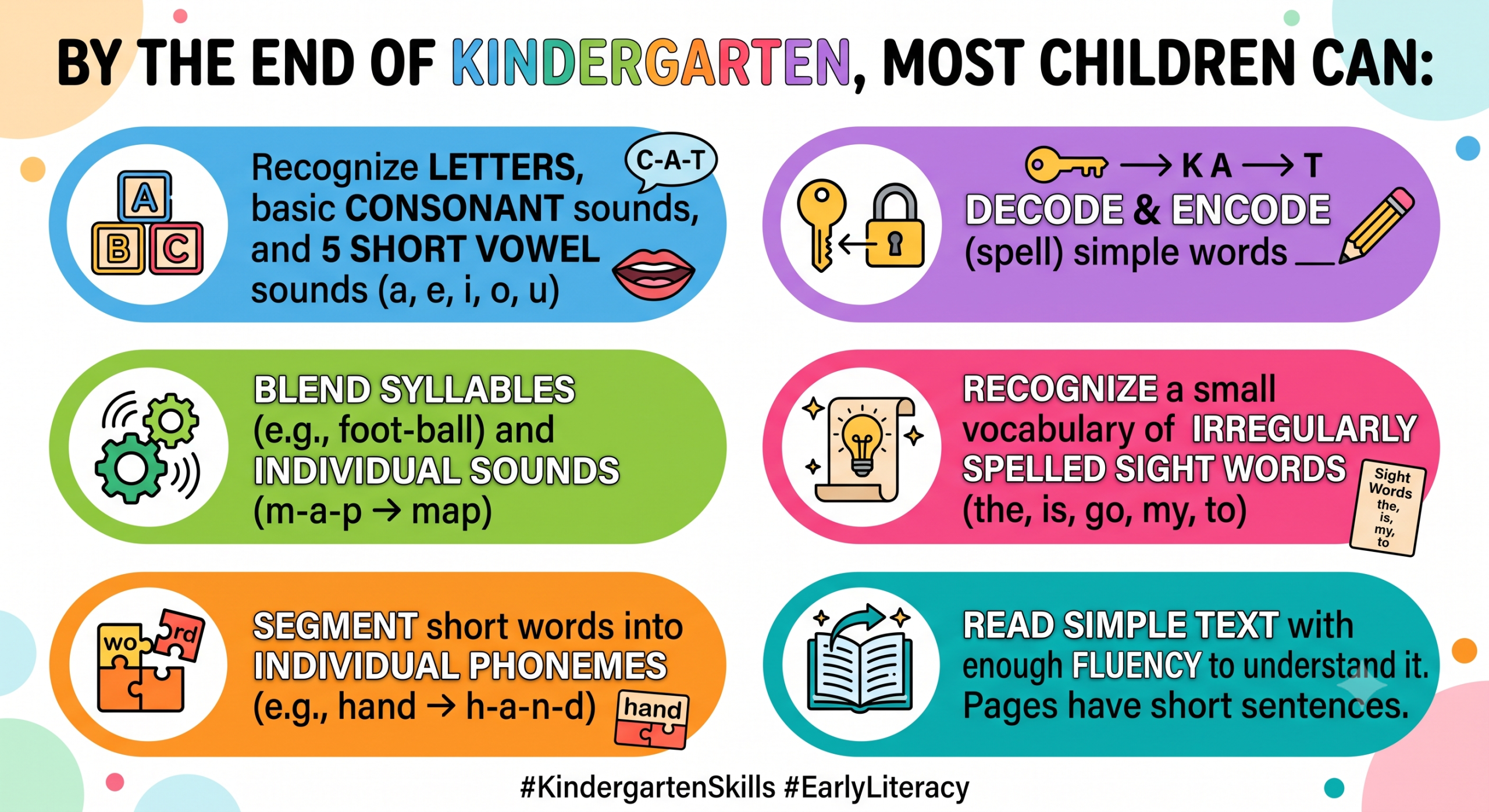
These two years are widely considered the most pivotal for reading instruction, since this is when most of a child’s core letter-sound (grapheme-phoneme) knowledge gets built. By the end of kindergarten, most children can:- Recognize letters and basic consonant sounds, plus the five short vowel sounds
- Blend syllables and individual sounds together
- Segment short words into individual phonemes
- Decode and encode (spell) simple words
- Recognize a small vocabulary of irregularly spelled sight words
- Read simple text with enough fluency to understand it
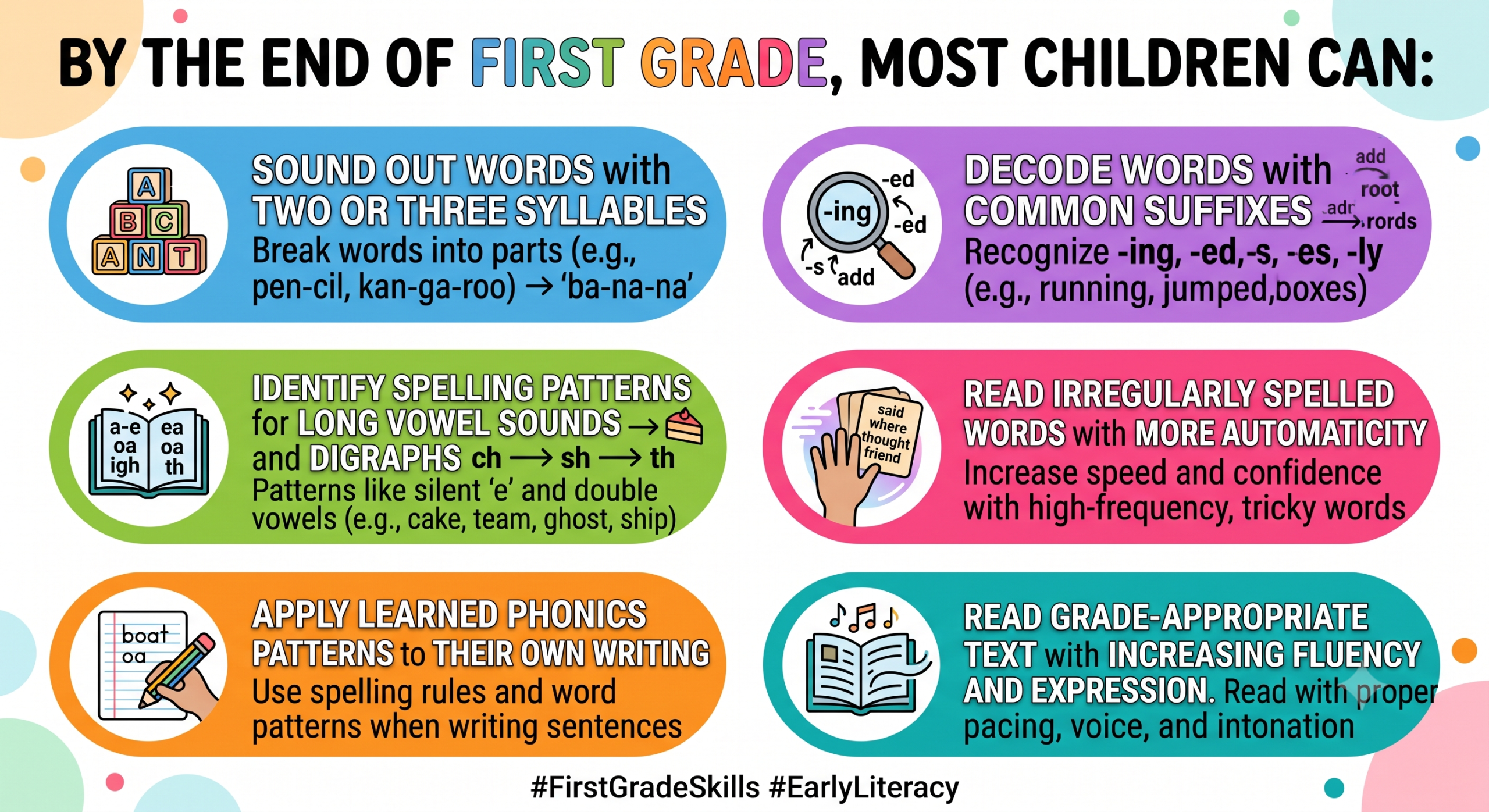
By the end of first grade, most children can:
- Sound out words with two or three syllables
- Decode words with common suffixes
- Identify spelling patterns for long vowel sounds and digraphs
- Read irregularly spelled words with more automaticity
- Apply learned phonics patterns to their own writing
- Read grade-appropriate text with increasing fluency and expression
Second and Third Grade: Deepening Comprehension
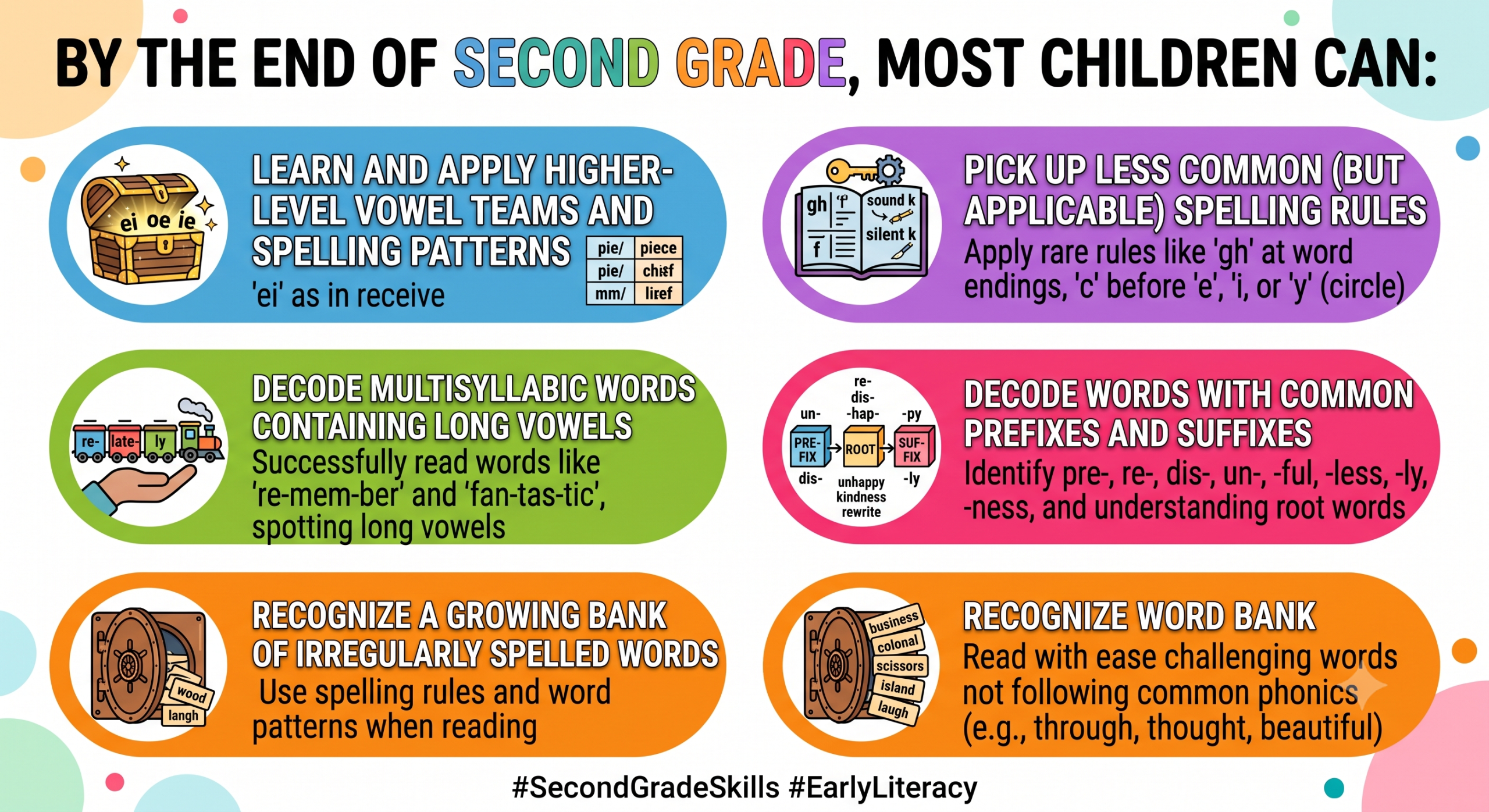
The shift from K-1 to grades 2-3 is less about learning new mechanics and more about applying mechanics that are (ideally) already largely in place — with a growing emphasis on comprehension depth. By the end of second grade, most children can:- Learn and apply higher-level vowel teams and spelling patterns
- Pick up less common (but still applicable) spelling rules
- Decode multisyllabic words containing long vowels
- Decode words with common prefixes and suffixes
- Recognize a growing bank of irregularly spelled words
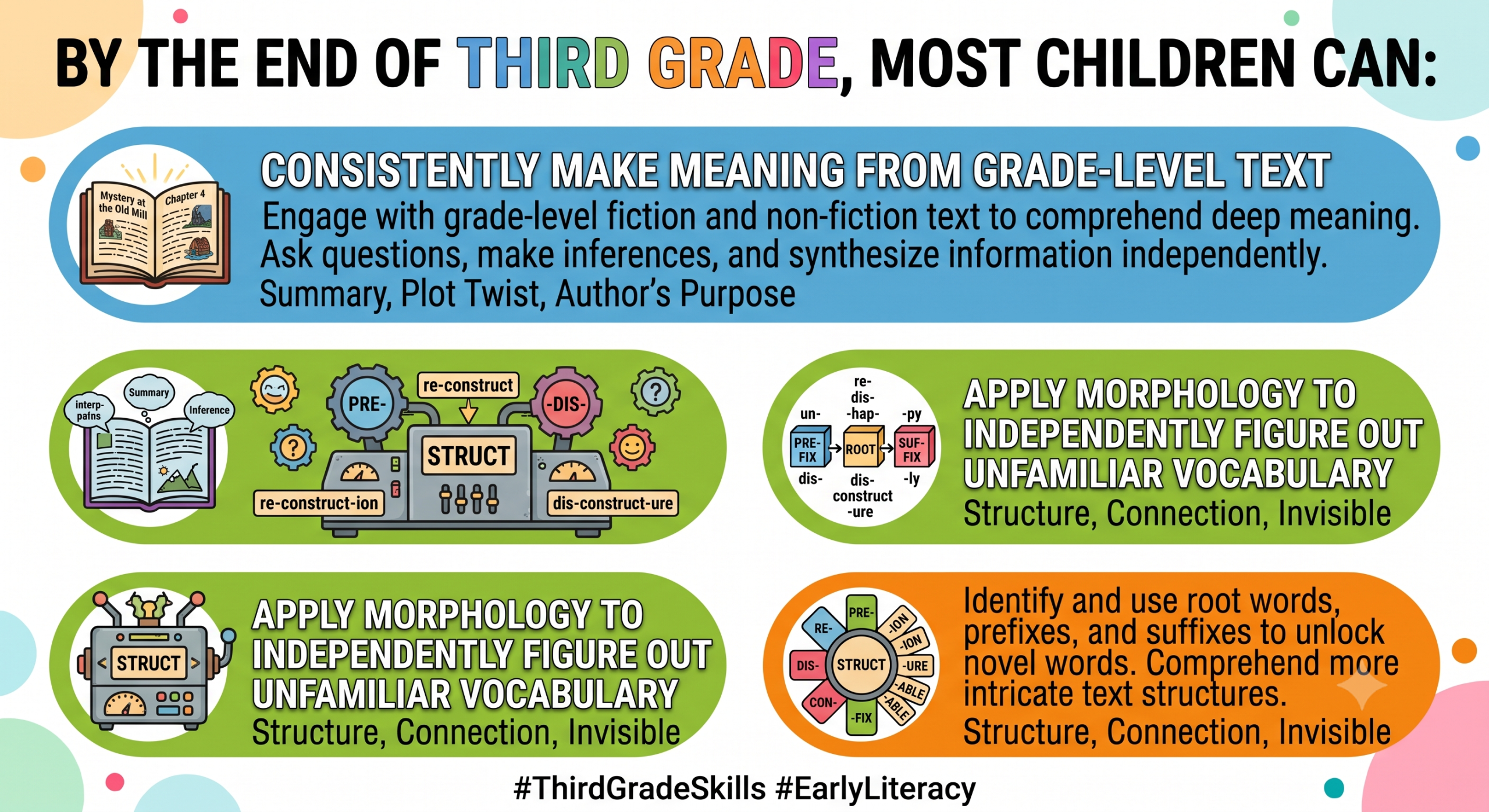
By the end of third grade, most children can:
- Consistently make meaning from grade-level text
- Begin applying morphology — using knowledge of word parts (prefixes, roots, suffixes) to independently figure out unfamiliar vocabulary and comprehend more complex text
That morphological piece matters more than it might seem: it’s what lets a student keep expanding vocabulary and comprehension independently, without needing every new word explicitly taught first.
When a Student Isn’t Meeting Expectations
Grade-level benchmarks are a helpful reference, not a promised outcome — some students need more time, more repetition, or a different kind of support to get there. For students with learning differences, shifting the focus from performance to progress is key. Common underlying challenges include:- Weak phonemic awareness
- Phonological processing difficulty
- Trouble with directional print tracking
- Difficulty sustaining attention
- Trouble recognizing letter and sound patterns
How Teachers and Parents Can Work Together
Consistency between school and home accelerates progress — and parents are one of the most powerful resources a struggling reader has, both for skill practice and emotional support. A few ways teachers can equip parents to help at the specific skill gap a child has:- Phonemic awareness gaps: Suggest simple auditory games, like asking a child what sound a word starts with during a car ride (“I see a park — what sound does park start with?”).
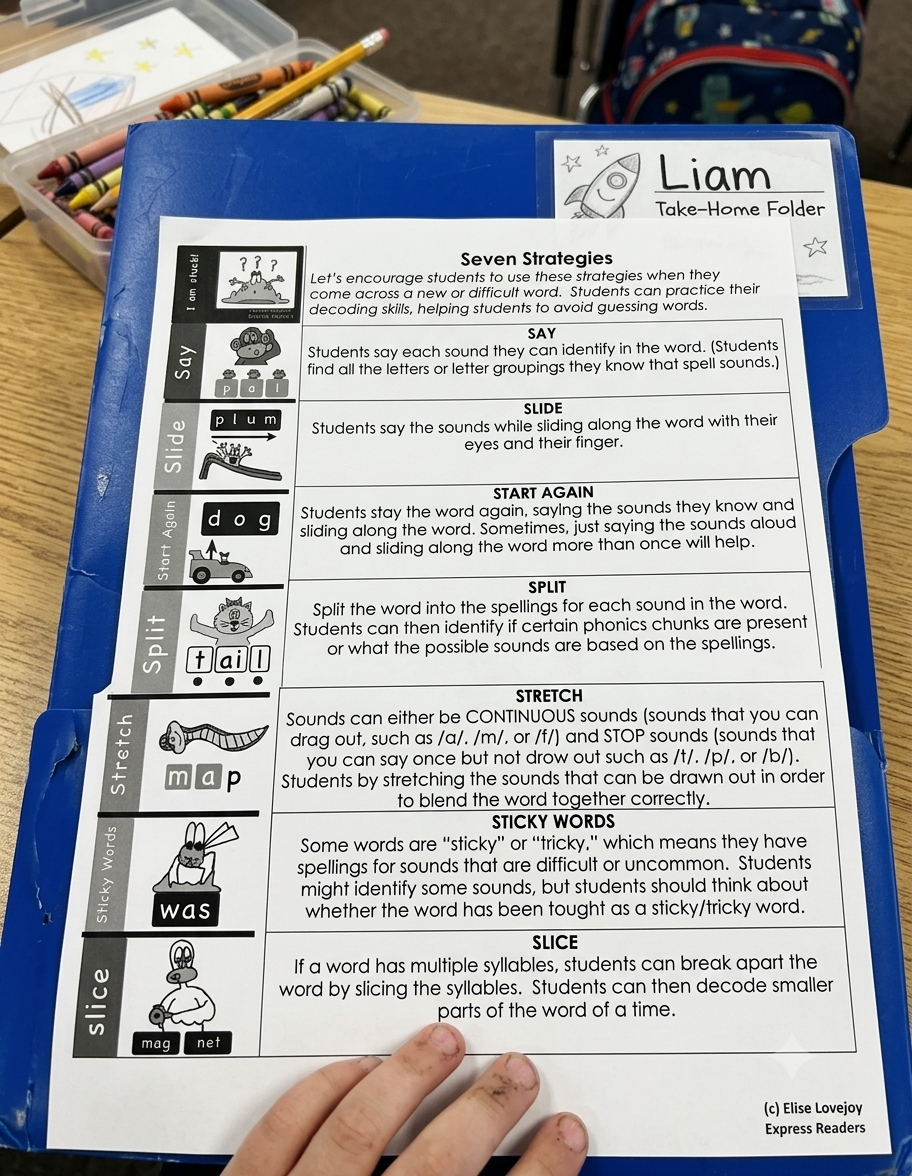
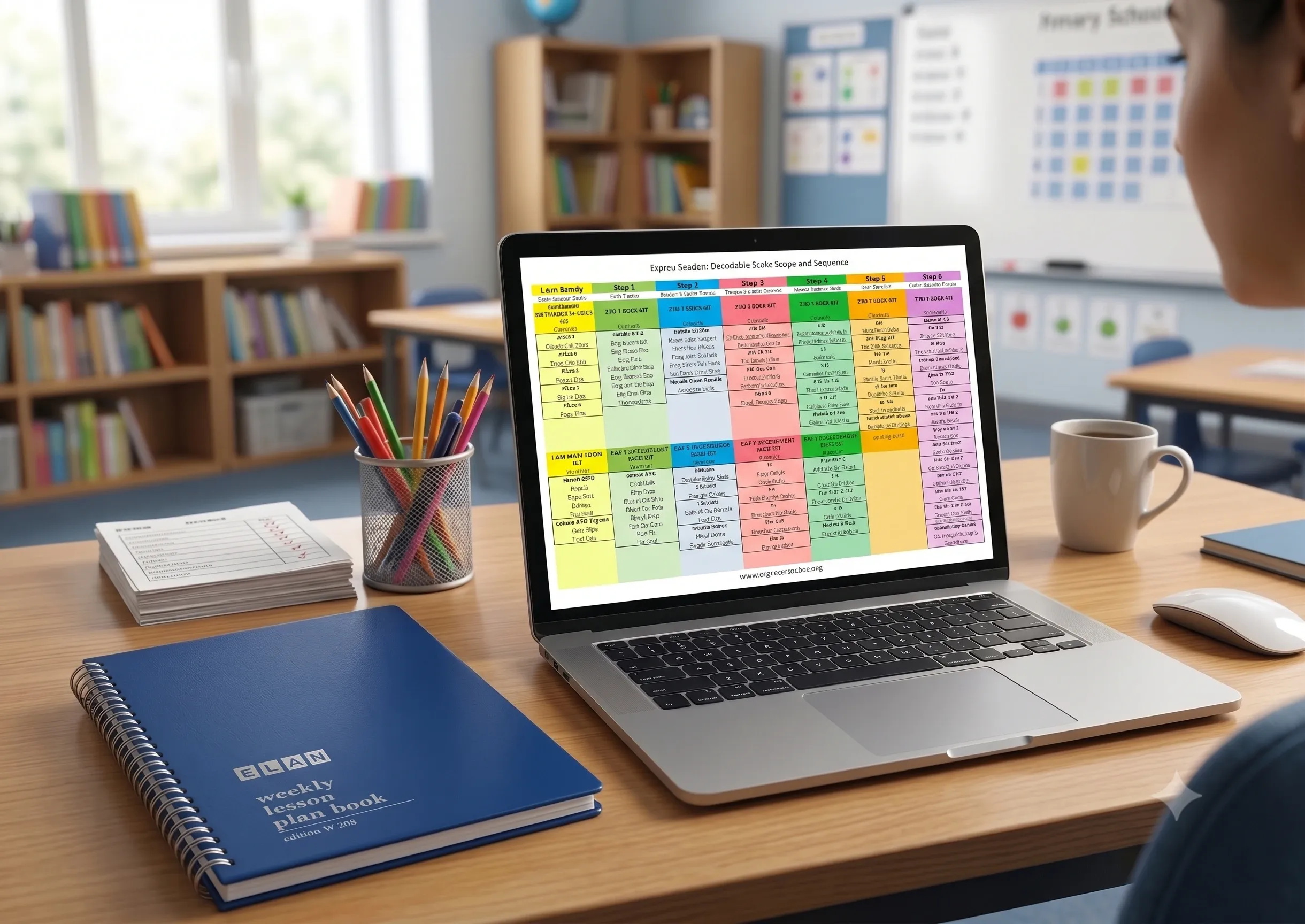
- Decoding gaps: Share the classroom’s scope and sequence, or send home decodable books matched to the sound-spellings a child has already been taught.
- Comprehension gaps: Encourage regular read-alouds at home, paired with real conversation about the story — not just a check for understanding, but genuine discussion.
Why Regular Practice Matters — and What “Practice” Should Look Like
Reading, like any skill, improves with repetition — not just exposure. Evidence suggests students should be actively applying a newly taught phonics skill for at least half of instructional time, using practice material that’s genuinely matched to what they’ve been taught. One note worth flagging for teachers: independent silent reading, long a classroom staple, doesn’t hold up well as an effective practice method for students still building foundational skills — a point echoed in National Reading Panel findings. More effective forms of practice include:- Partner reading
- Small-group reading of decodable text
- Reading aloud to a teacher
- Whisper reading
Supporting Reading Practice at Home
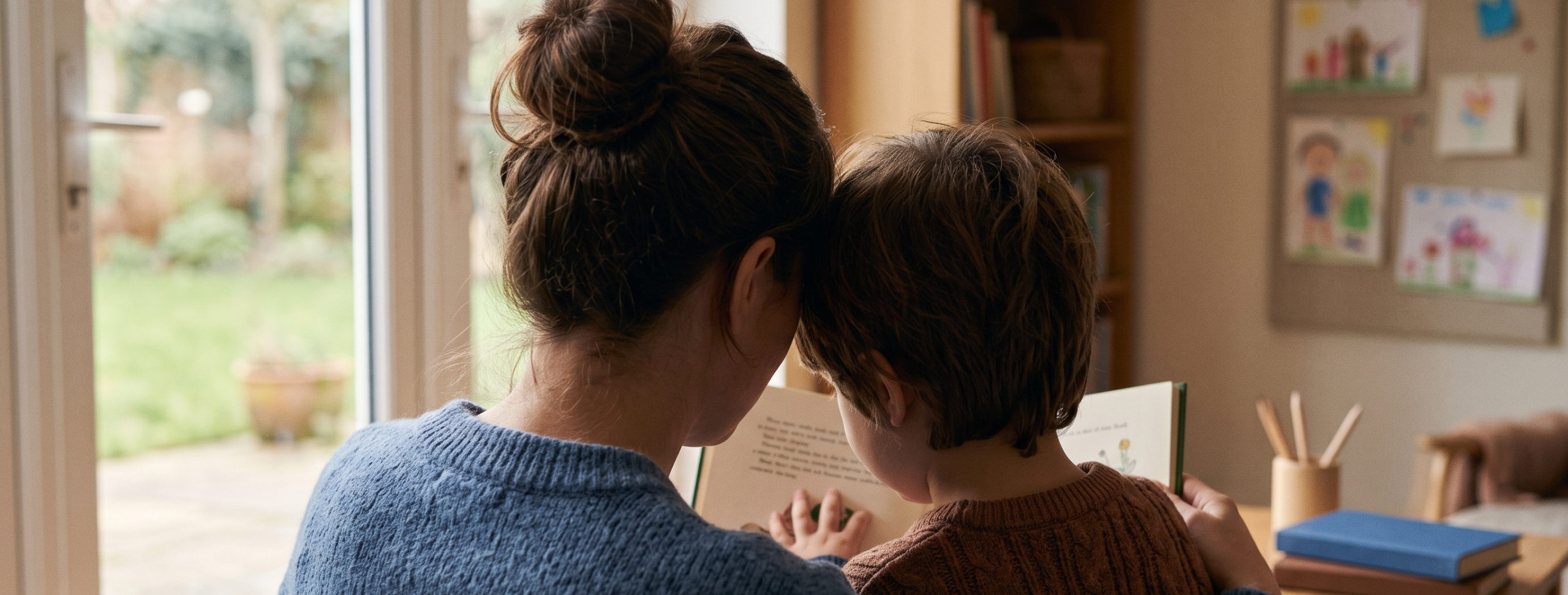
At home, the goals shift slightly. Classroom practice needs to be structured and skill-matched; home practice can lean more into choice and enjoyment. Letting a child pick their own books, stepping in to help when text gets too hard, and showing genuine interest in what they’re reading all go a long way toward building a lasting love of reading — alongside the skill-building itself. Reading together — even just a parent reading aloud — is valuable in its own right. Talking about favorite characters, predicting what happens next, or sharing opinions about a story builds comprehension and connection at the same time.
Every Child’s Timeline Looks a Little Different
Grade-level reading expectations are a useful compass, not a verdict. What matters most is steady support — at school and at home — for wherever a child currently is in their reading journey. With explicit instruction, consistent practice, and patience, most children build not just the skill to read, but a genuine love of it.