Decodable books give students something most early reading material can’t: the chance to practice exactly the phonics skills they’ve just been taught, in real connected text. That targeted repetition is what makes decoding move from effortful to automatic. But here’s the catch — not every book labeled “decodable” is actually built well, and a poorly constructed one can do more harm than good.
So what separates a genuinely useful decodable text from one that just checks a phonics box? Here’s what to look for.
What Is a Decodable Text, Exactly?
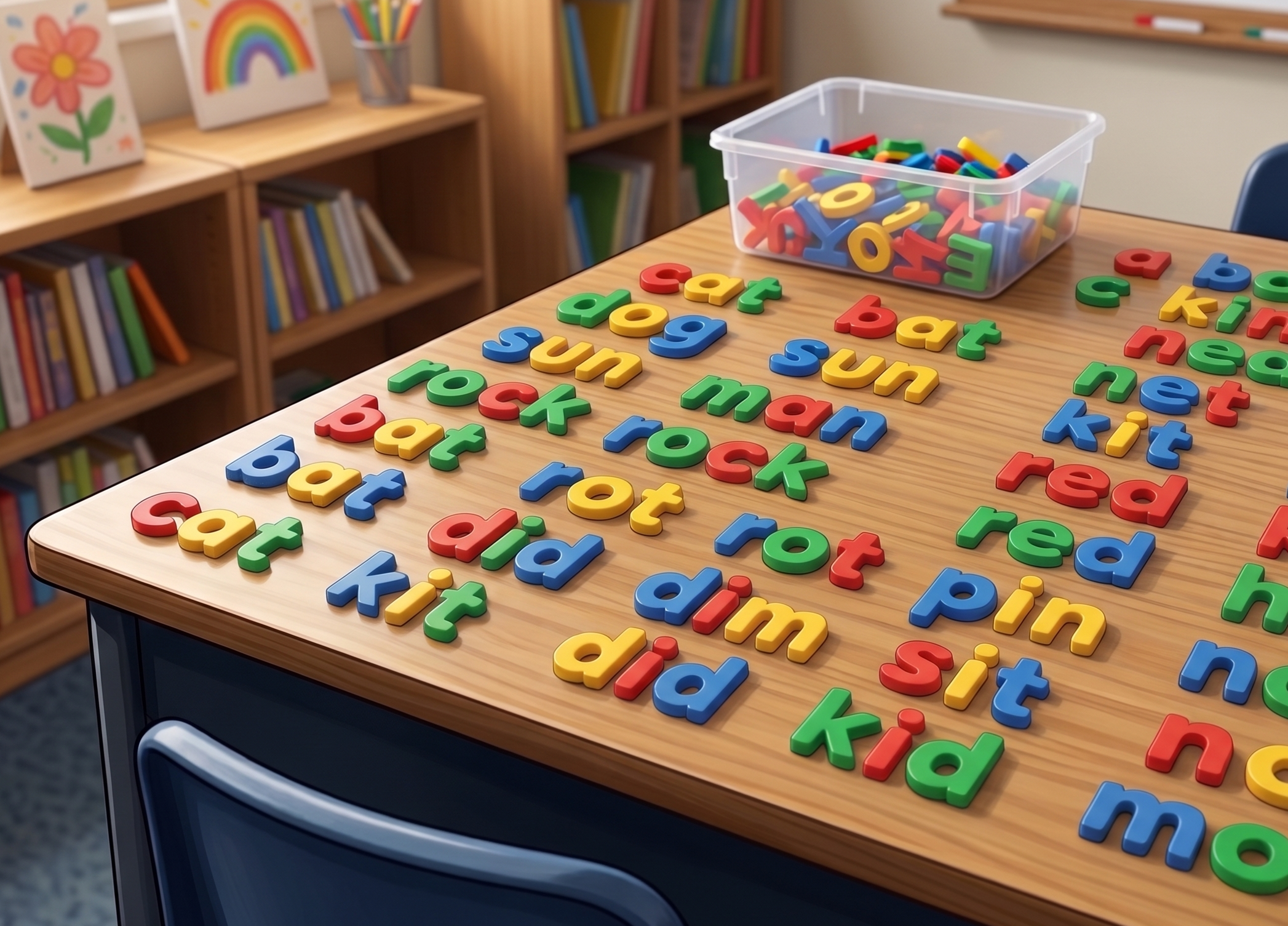
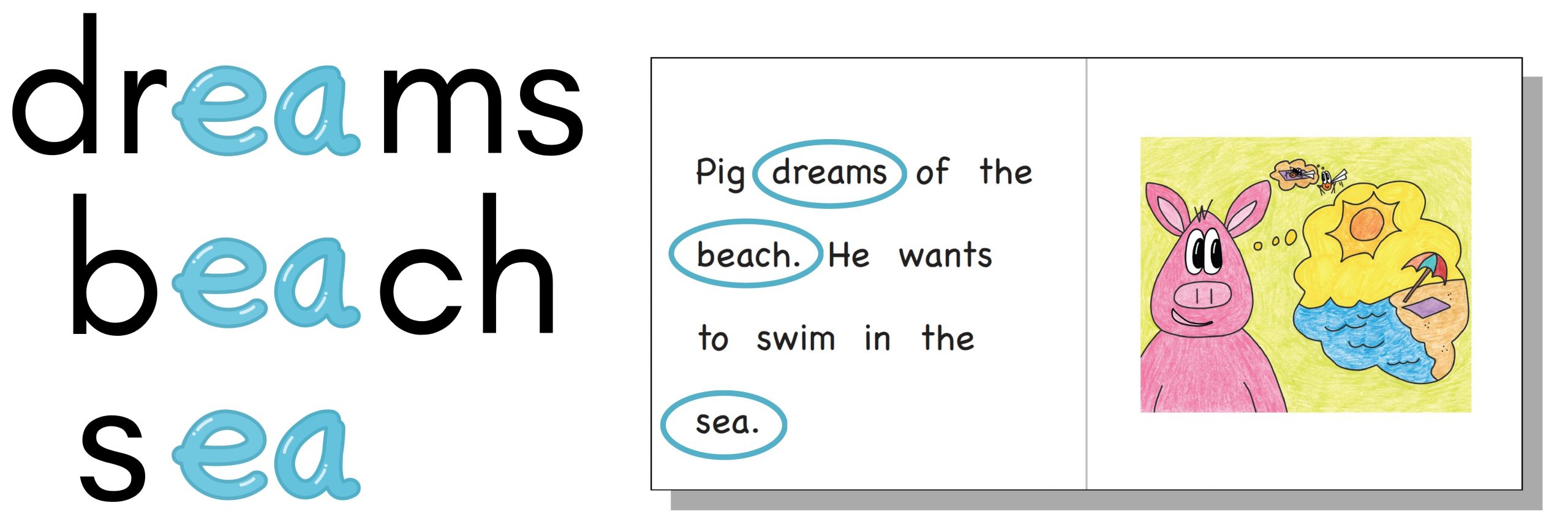
A decodable text is built around a specific set of grapheme-phoneme patterns — the sound-spelling relationships a student has already been taught. Instead of random vocabulary, the words in the book are deliberately chosen to match a classroom’s phonics scope and sequence, whether that’s CVC words, vowel teams, consonant blends, or CVCe patterns. Because the words are drawn almost entirely from skills students already know, decodables allow for independent or near-independent reading. Students aren’t guessing from pictures or memorizing shapes — they’re applying real sound-symbol knowledge to read the words in front of them.
Three Characteristics of a High-Quality Decodable
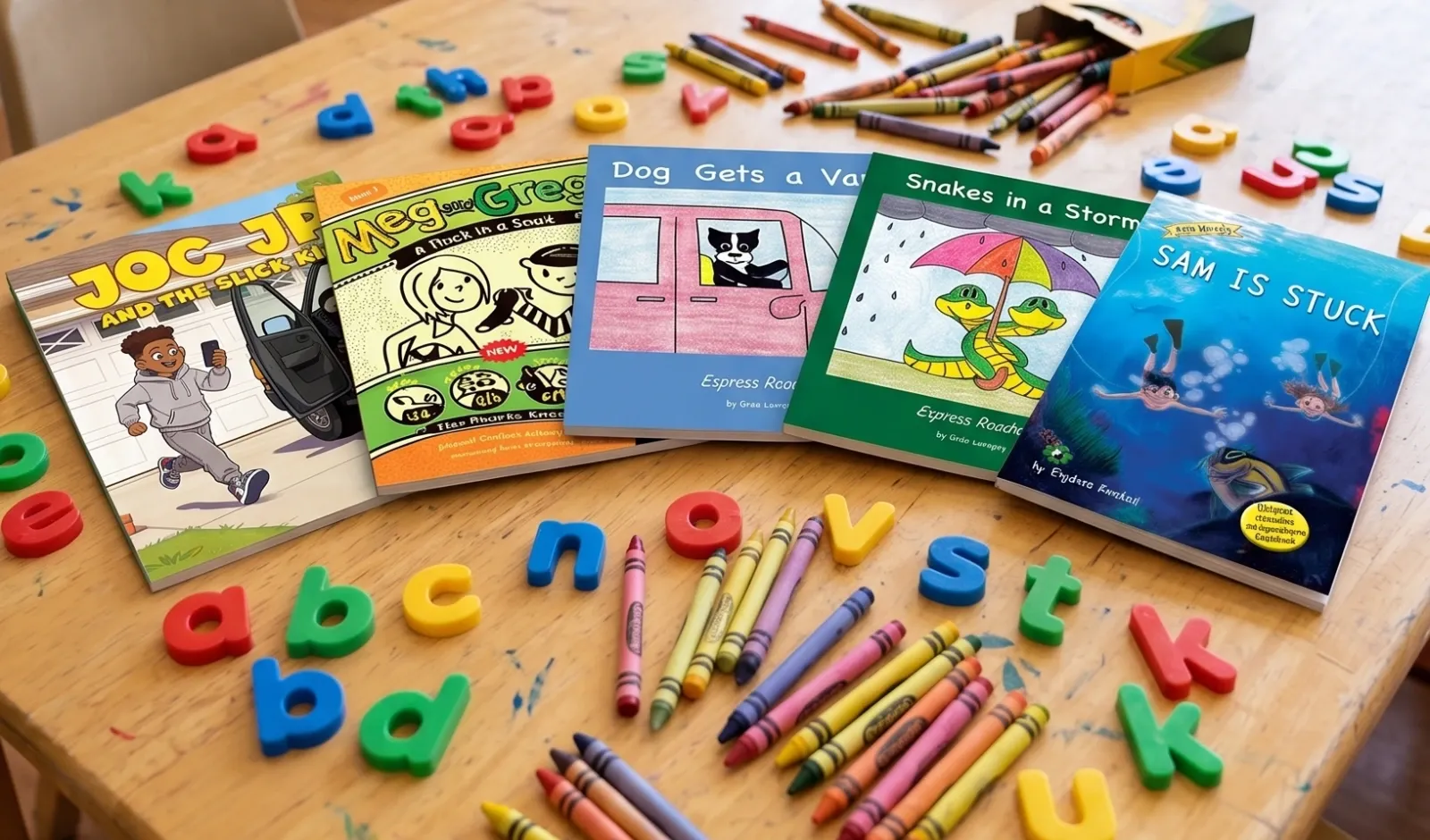
When you’re evaluating a decodable book — whether for a classroom library or a single title — look for these three qualities. 1. Comprehensible A quality decodable should still be a real story, with a clear narrative, characters of interest, and a setting that makes sense. This matters more than it might seem: a comprehensible story gives teachers something to discuss with students beyond decoding, and gives students a reason to actually want to finish the book. Weak decodables often skip this step entirely — sentences get strung together awkwardly just to hit a phonics target, with little regard for whether the result actually makes sense as a story. Every reading encounter is an opportunity to involve other skills, such as fluency building, foundational comprehension strategies, and even vocabulary acquisition. 2. Instruction-Aligned A well-built decodable follows a clear, sequential build of grapheme-phoneme relationships, layering new skills onto ones students already know — and it shouldn’t include many phonics patterns that haven’t been taught yet. High-quality series also flag irregular or high-frequency words (called “sticky words” in Express Readers) up front, so students can preview them before reading rather than stumbling mid-sentence. The target phonics pattern should also repeat generously throughout the text — that repetition is the whole point, giving students enough opportunities to build real fluency with the pattern. Since a decodable book’s main purpose is to be a place for practice with learned phonics structure, a quality decodable book still needs to be aligned to your scope and sequence in instruction to be effective. 3. Engaging Phonics accuracy alone doesn’t make a good decodable — the story still has to be worth reading. Look for natural-sounding sentences, correct grammar, and content that connects to what kids actually care about. Fragmented, awkward sentences (a common shortcut in weaker decodables) tend to lose students fast, even if every word is technically decodable. Engagement isn’t a bonus feature here — it’s what gets a student to willingly read the same phonics pattern across multiple books, which is exactly the repetition that builds mastery.Red Flags: Signs of a Low-Quality Decodable
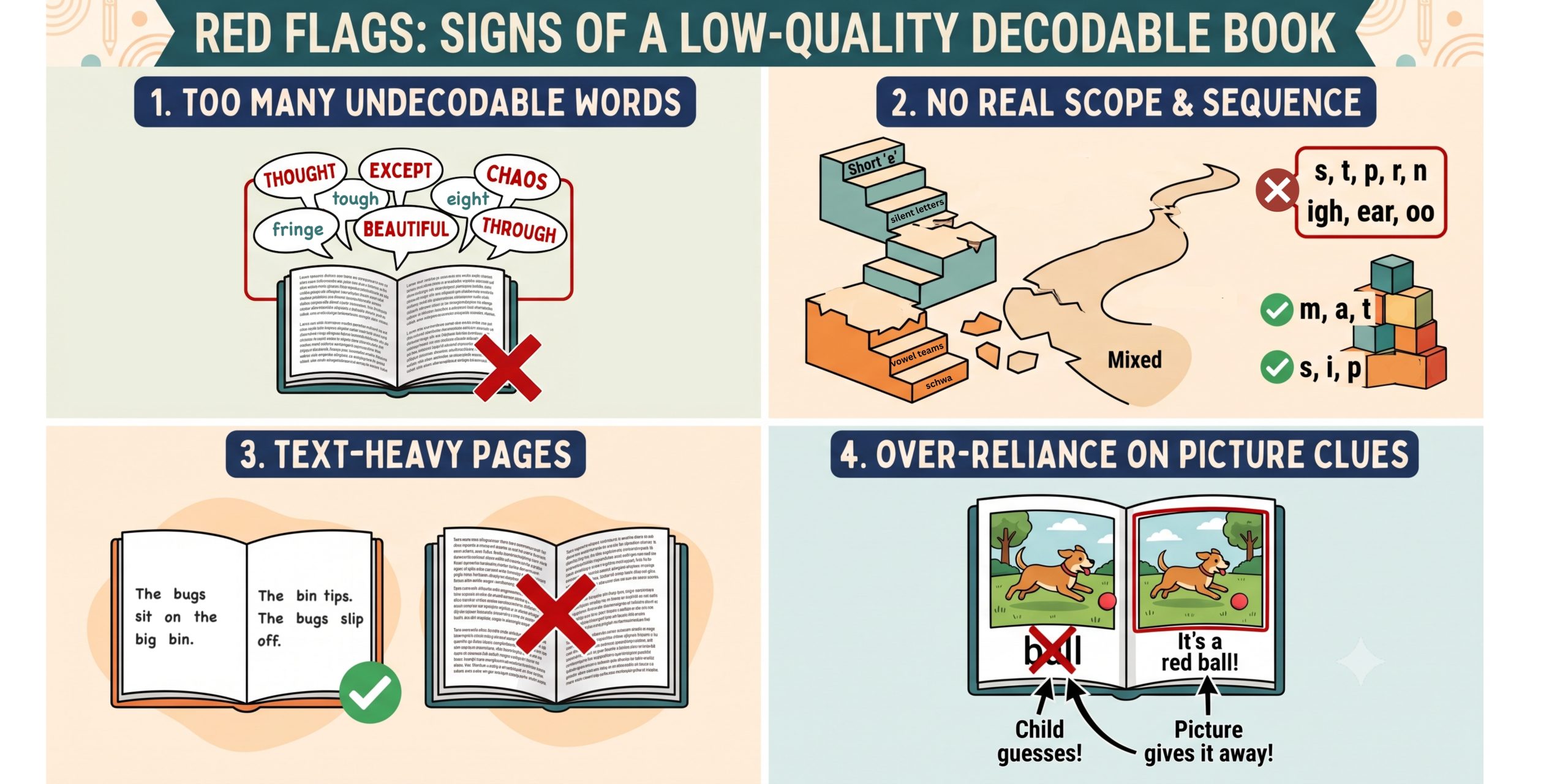
When evaluating a book, watch for:- Too many undecodable words: If a large share of the text relies on irregular spellings or phonics patterns a student hasn’t learned, it’s not doing its job. This is an uncontrolled text in disguise.
- No real scope and sequence: A high-quality decodable should build on previously taught skills. Patterns should build logically and match grade-level expectations, not appear at random.
- Overwhelming, Text-Heavy Pages: Early readers can easily get fatigued by too much text. Effective decodable books manage the word count per page to ensure the focus remains on successful decoding practice.
- Predictable Picture Clues: The illustration should support the story, not be the story. If a child can completely predict the text just by looking at the drawing, they are practicing picture recognition rather than reading the actual words.
Choosing Well Makes Teaching (and Reading at Home) More Effective
The best decodable books hit all three marks — comprehensible, matching instruction, and engaging — at the same time. That combination is what separates a book students tolerate from one they actually want to reread, and rereading is where real fluency comes from. Whether you’re building out a classroom library, a small-group intervention set, or a home bookshelf, it’s worth holding every decodable to this same bar. A book that only “counts” as decodable on a technicality isn’t going to do much for the student reading it — but one that’s comprehensible, matching your instruction, and genuinely engaging can turn decoding practice into something a valuable reading experience for a child and a book they will look forward too.